
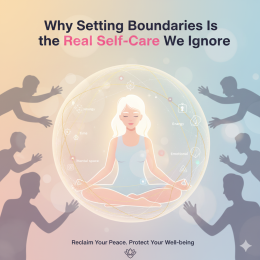
Why Setting Boundaries Is the Real Self-Care We Ignore
2025-12-01 18:24:53We talk a lot about self-care today - skincare, a weekend getaway, digital detox, treating yourself to something nice. But the truth is, none of these matter if we don't protect our emotional energy first.
And that protection comes from one powerful but underrated skill: setting boundaries.
Many people think boundaries are rude, selfish, or too harsh. In reality, healthy boundaries are emotional oxygen - without them, your mental well-being slowly suffocates.
At CIIMHANS, we see one common pattern among people struggling with anxiety, burnout, relationship stress, and overwhelm:
they don't know how to say "No."
What Exactly Are Boundaries?
Boundaries are the invisible lines that separate your needs, feelings, and limits from those of others.
They let people know:
how you want to be treated,
what behaviour is acceptable,
what drains your mental health,
and what supports your emotional well-being.
Boundaries are not walls.
They're filters.
They help you stay kind without losing yourself.
Why We Avoid Setting Boundaries
If boundaries are so important, why don't we set them?
Because many of us grew up believing:
If I say no, they'll think I'm selfish.
I don't want to disappoint anyone.
I can handle it, I'll adjust.
If I speak up, it will create conflict.
This constant people-pleasing becomes a habit - and eventually a burden.
You become emotionally exhausted without even realizing it.
Signs You Need Better Boundaries
You may have a boundary problem if:
You feel tired even after resting
You say "yes" when you want to say "no"
You feel guilty taking time for yourself
You get overwhelmed easily
You attract emotionally draining people
You feel responsible for everyone's feelings
You fear being disliked if you speak up
These are not personality traits -
These are signs of boundary fatigue.
How Poor Boundaries Harm Your Mental Health
Ignoring boundaries can lead to:
Burnout
Anxiety
Resentment
Low self-esteem
Chronic stress
Unhealthy relationships
Loss of identity
When you don't protect your mental space, you teach others that your needs come last - and over time, even you start believing that.
Why Boundaries Are the Real Self-Care
True self-care is not about bubble baths.
It's about:
Saying no without guilt
Protecting your peace
Choosing rest over approval
Putting emotional health over convenience
Allowing yourself to be human
Walking away from draining situations
Speaking up when something hurts you
Self-care begins the moment you say:
"My feelings matter too."
How to Start Setting Healthy Boundaries
You don't have to change everything overnight.
Begin with small, gentle steps:
1. Pause before saying yes
Give yourself permission to think:
"Do I really want this?"
2. Communicate without fear
Use simple statements like:
"I'm not available right now."
"I need some time to myself."
"That doesn't work for me."
3. Learn to be okay with disappointing people
Your mental health is not negotiable.
4. Notice when your body says no
Tension, heaviness, and irritation are signs that your limit is being crossed.
5. Stop apologizing for your needs
You're not wrong for protecting your peace.
Boundaries Build Better Relationships
Contrary to popular belief, boundaries don't push people away.
They strengthen relationships because:
They reduce resentment
They create mutual respect
They improve communication
They make expectations clear
They allow emotional safety
People who truly care about you will respect your limits.
Those who don't respect them - were benefiting from your lack of boundaries.
When to Seek Professional Help
If setting boundaries feels impossible, overwhelming, or guilt-filled, a therapist can help you understand the deeper emotional patterns.
At CIIMHANS, our trained mental health professionals support individuals struggling with:
People-pleasing
Stress overload
Emotional burnout
Anxiety
Relationship issues
Low self-esteem
Childhood trauma
Difficulty expressing needs
Talking to a professional can give you tools, techniques, and confidence to build healthier emotional boundaries.