
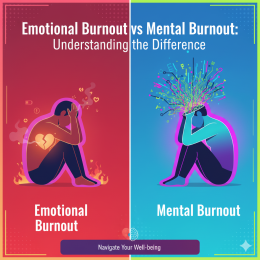
Emotional Burnout vs Mental Burnout: Understanding the Difference
2025-12-03 17:14:45Burnout is no longer just a workplace buzzword - it has become a silent crisis impacting our minds, emotions, and everyday functioning. Most people use emotional burnout and mental burnout as if they mean the same thing, but in reality, they are two different experiences. Understanding the difference is essential if you want to protect your mental health, recover faster, and know when to seek professional support from the best mental hospital or mental health centre near you.
What Is Emotional Burnout?
Emotional burnout happens when your feelings become drained. It’s the stage where you have nothing left to give emotionally, even though life keeps demanding more. People going through emotional burnout often feel numb, overly sensitive, or detached from the world around them.
It shows up as:
You get irritated easily
Small issues feel overwhelming
You feel emotionally exhausted even after resting
You struggle to connect with people
You feel “tired of feeling”
It’s like your emotional capacity is running on 1%, but the world keeps asking for 100%.
What Is Mental Burnout?
Mental burnout affects the thinking part of your brain. Instead of emotional overload, your thoughts become foggy, slow, and unfocused. You feel mentally “fried,” unable to think clearly or make decisions.
It often looks like:
Difficulty concentrating
Forgetting simple things
Feeling disconnected from your own thoughts
Struggling to process information
Feeling mentally paralyzed or blank
Mental burnout affects productivity, learning, decision-making, and self-control - and can make even simple tasks feel impossible.
How They Differ - And Why It Matters
While emotional burnout affects your feelings, mental burnout affects your thinking and cognition. Both are harmful, but they need different recovery approaches. Emotional burnout heals through emotional release, connection, and self-expression. Mental burnout heals through rest, reduced mental load, and cognitive reset.
Recognizing which one you’re facing helps you heal faster, lowers stress, and prevents long-term mental health concerns - something CIIMHANS and other mental health experts emphasize strongly.
Why Burnout Is Rising Today
We live in an age of constant pressure - academic, professional, social, and digital. Kids, teens, adults, even parents - everyone is overstimulated yet emotionally drained. Social media, unrealistic expectations, lack of work-life balance, and less supportive connections have all contributed to this silent epidemic.
This is why institutions like CIIMHANS, often regarded as the best mental hospital for comprehensive care, highlight the importance of early intervention and awareness.
When Should You Seek Help?
If burnout starts affecting your sleep, relationships, mood, or ability to work, it’s no longer “normal stress.”
Warning signs include:
Constant irritation
Emotional numbness
Memory issues
Feeling exhausted after minor tasks
Losing interest in everything
Withdrawing from people
Reaching out to a psychologist, therapist, or mental health expert is not a weakness - it’s a step toward healing.
Final Thoughts
Burnout doesn’t happen overnight. It builds slowly - through ignored feelings, overscheduled days, and unprocessed stress. Whether you’re dealing with emotional burnout, mental burnout, or both, understanding the difference is the first step toward reclaiming your well-being.
Healing becomes easier when you reach out, take support, and allow yourself to rest. And if it ever feels too heavy, professional help from experts at the best mental hospital or a trusted mental health centre can guide you back toward balance.