
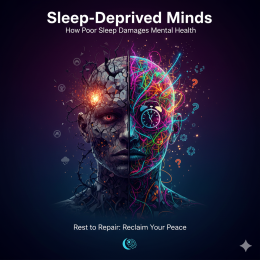
Sleep-Deprived Minds: How Poor Sleep Damages Mental Health
2025-12-04 18:16:43Sleep is not a luxury - it is a biological necessity. Yet today, more people than ever are sleep-deprived, running on caffeine, stress, and late-night scrolling. What many don’t realize is that poor sleep doesn’t just make you tired. It rewires your emotions, weakens your brain, and slowly damages your mental health.
In a world where productivity is glorified and rest is ignored, understanding the connection between sleep and mental well-being is more important than ever - something top mental health centres like CIIMHANS, often considered one of the best mental hospitals, consistently emphasize.
Why Sleep Matters for the Brain
Sleep is the brain’s repair shop. Every night, your mind cleans up stress, resets your emotions, builds memory, and restores your ability to think clearly. When you don’t sleep enough, your brain doesn’t get the time it needs to perform these essential functions.
This is why sleep deprivation feels like:
Brain fog
Irritability
Difficulty concentrating
Emotional instability
Forgetfulness
Low motivation
Your brain is simply not operating at its full capacity.
How Poor Sleep Damages Mental Health
1. Amplifies Anxiety
When your brain is tired, your stress response becomes hyperactive. Small worries start to feel big, and your mind jumps to worst-case scenarios. Many people experience racing thoughts and intense anxiety when they are sleep-deprived because their brain can’t regulate emotions properly.
2. Triggers or Worsens Depression
Lack of sleep disrupts serotonin and dopamine - the “feel-good” chemicals. Over time, this imbalance increases the risk of depression and emotional numbness. People who sleep less than 6 hours regularly are significantly more prone to low mood and lack of interest.
3. Weakens Emotional Control
Sleep deprivation shuts down the prefrontal cortex (the decision-making part) and activates the amygdala (the emotional alarm).
This means:
You react faster, get upset easily, and lose patience quickly.
4. Impairs Memory and Learning
Ever felt like you read something but nothing stays in your mind?
That’s because sleep helps store memories. Without enough rest, your brain struggles to process new information - affecting students, professionals, and even daily tasks.
5. Reduces Stress Tolerance
A rested brain handles pressure.
A tired brain collapses under it.
People with chronic sleep deprivation are more sensitive to stress and often feel overwhelmed by simple responsibilities.
The Vicious Cycle: Poor Sleep > Poor Mental Health > Even Poorer Sleep
Once your mental health suffers, sleep becomes even harder. Anxiety causes insomnia. Depression disrupts your sleep cycle. Overthinking keeps you awake.
This creates a loop that can be difficult to break without proper guidance - which is why professional help from mental health specialists or the best mental hospital can make a huge difference.
Why Sleep Problems Are Rising Today
Late-night phone usage
Academic/work pressure
Irregular routines
Social media addiction
Stress and overthinking
Poor lifestyle habits
Modern life has made “rest” look unproductive, but it is the foundation of healthy mental functioning.
When Should You Seek Help?
If poor sleep is affecting your mood, concentration, relationships, or daily functioning, it’s not “normal tiredness” anymore.
Seek help if you experience:
Trouble falling or staying asleep
Constant fatigue
Mood swings
Increased anxiety or irritability
Dependence on caffeine
Overthinking at night
Sleep issues often signal underlying emotional or psychological concerns, which trained professionals at centres like CIIMHANS can help you understand and treat.
Final Thoughts
Healthy sleep is not something you “fit into” your schedule - it is the foundation your mental health stands on. When your sleep suffers, your emotional stability, thinking ability, and stress tolerance all decline. Prioritizing sleep is one of the simplest yet most powerful forms of self-care.
And if sleep problems feel bigger than you can handle alone, reaching out to a mental health expert is not a sign of weakness - it’s the smartest step toward healing.