
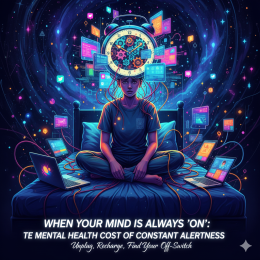
When Your Mind Is Always "On": The Mental Health Cost of Constant Alertness
2026-01-12 16:37:35In today’s fast-paced world, many people live in a state of continuous mental alertness. Even during rest, the mind remains active - replaying conversations, planning future tasks, and anticipating problems that haven’t yet happened. This constant “on” mode is often normalized as productivity, but over time, it silently affects mental health.
At CIIMHANS, we increasingly see individuals who are not facing a single traumatic event, but rather the exhaustion of never mentally switching off.
What Does It Mean to Live in Constant Alert Mode?
Constant alertness occurs when the brain stays in survival mode for extended periods. The nervous system remains activated, preparing for threats that may never come. While this response is useful in emergencies, living in this state daily leads to chronic mental fatigue.
Many people mistake this condition for motivation or responsibility, unaware that their mind is under persistent stress.
Signs Your Mind Is Overstimulated
When the brain is constantly alert, subtle signs begin to appear. These may include difficulty relaxing, disturbed sleep, irritability, poor concentration, emotional numbness, or a sense of restlessness even during downtime. Over time, individuals may experience anxiety, burnout, or depressive symptoms without understanding the root cause.
How Constant Alertness Affects Mental Health
Remaining mentally alert for long periods disrupts emotional regulation and stress recovery. The brain struggles to process emotions properly, increasing vulnerability to anxiety disorders, panic symptoms, and mood disturbances. Decision-making becomes harder, patience shortens, and emotional resilience weakens.
Left unaddressed, this mental state can lead to chronic stress-related mental health conditions.
The Mind-Body Connection in Chronic Stress
Mental overactivation also impacts the body. Persistent stress signals can result in headaches, muscle tension, digestive discomfort, heart palpitations, and lowered immunity. The body reflects what the mind has been holding for too long.
Understanding this connection is crucial for long-term mental and physical well-being.
Why Slowing Down Feels Uncomfortable
For many individuals, slowing down triggers guilt or anxiety. Rest may feel unproductive or unsafe because the mind has adapted to constant stimulation. This discomfort often prevents people from recognizing when they truly need support.
Learning to slow the mind is not about laziness - it is about restoring balance to the nervous system.
How Mental Health Support Helps Restore Balance
Therapeutic support helps individuals recognize patterns of chronic alertness and develop healthier responses to stress. At CIIMHANS, mental health professionals work with individuals to rebuild a sense of safety, improve emotional regulation, and retrain the nervous system to rest.
Through therapy, individuals learn how to:
Identify stress triggers
Reduce mental overload
Improve sleep quality
Strengthen emotional resilience
Restore psychological balance
Choosing Rest as a Mental Health Priority
Mental well-being requires moments of mental stillness, not constant performance. Giving the mind permission to rest is a vital step toward emotional health, clarity, and long-term resilience.
At CIIMHANS, we emphasize that mental health care is not only for crisis moments - it is essential for maintaining a healthy, balanced life.