
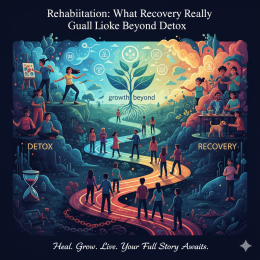
Rehabilitation: What Recovery Really Looks Like Beyond Detox
2026-01-14 18:55:57For many people, the word rehabilitation immediately brings one image to mind: detox. The idea of removing substances from the body, managing withdrawal symptoms, and “getting clean.” While detox is an important first step, it is only the beginning of recovery-not the destination.
True rehabilitation goes far beyond physical detox. Real recovery happens when the mind heals, emotions are understood, and life patterns begin to change. At CIIMHANS, we often remind families and patients that detox clears the body, but rehabilitation rebuilds the person.
Detox Treats the Body, Not the Root Cause
Substance use and many mental health conditions are rarely just about the substance itself. They are often coping mechanisms for deeper struggles-unresolved trauma, chronic stress, emotional pain, anxiety, depression, or a sense of emptiness.
Detox helps stabilize the body and manage immediate physical risks, but it does not address why the addiction or dependency started in the first place. Without psychological and emotional treatment, the risk of relapse remains high.
That is why rehabilitation must continue beyond detox-to treat the root causes, not just the symptoms.
Recovery Is a Mental and Emotional Process
After detox, many individuals experience emotional vulnerability. Feelings that were numbed by substances-fear, anger, guilt, sadness-begin to surface. This phase can be confusing and overwhelming without proper guidance.
Rehabilitation provides a structured space where individuals can safely explore these emotions with trained mental health professionals. Therapy helps them understand patterns of behavior, emotional triggers, and thought processes that fuel addiction or mental health struggles.
This emotional healing is where real recovery begins.
Learning New Ways to Cope With Life
One of the most important aspects of rehabilitation is learning healthier coping mechanisms. Many people relapse not because they want to, but because they don’t know how else to deal with stress, conflict, loneliness, or pressure.
In rehabilitation, individuals learn practical skills such as emotional regulation, stress management, communication, boundary-setting, and problem-solving. These skills help them face real-life challenges without returning to harmful habits.
Recovery is not about avoiding life-it’s about learning how to live it differently.
Rebuilding Identity and Self-Worth
Addiction and prolonged mental health struggles often damage self-esteem. People begin to see themselves only through the lens of failure, guilt, or shame. Rehabilitation focuses on rebuilding identity beyond the illness.
Patients are encouraged to reconnect with their values, strengths, and goals. Over time, they begin to see themselves not as “addicts” or “patients,” but as individuals capable of growth, responsibility, and change.
This shift in self-perception is critical for long-term recovery.
The Role of Routine and Structure
One of the hidden benefits of rehabilitation is structure. Regular schedules, therapy sessions, self-care routines, and healthy habits help retrain the brain and body. Structure creates stability-something that is often missing in active addiction or severe mental health conditions.
Over time, this routine helps individuals regain control over their day, their choices, and their future.
Healing Relationships, Not Just Individuals
Recovery does not happen in isolation. Addiction and mental illness affect families deeply, often creating mistrust, emotional distance, and pain. Rehabilitation frequently includes family counseling and education, helping loved ones understand the illness and learn healthier ways to support recovery.
This process helps rebuild trust, improve communication, and create a supportive environment for life after rehabilitation.
Recovery Is Ongoing, Not Instant
Perhaps the most important truth about rehabilitation is this: recovery is not a one-time event. It is a continuous process. Completing a rehab program does not mean challenges disappear-it means individuals are better prepared to handle them.
Aftercare, follow-up therapy, support systems, and lifestyle changes are all part of sustained recovery. Rehabilitation gives people the tools: ongoing effort keeps recovery alive.
CIIMHANS - Central India Institute of Mental Health and Neuro Sciences
Committed to comprehensive rehabilitation, mental health care, and long-term recovery.