
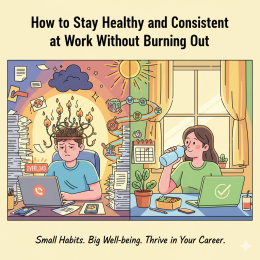
How to Stay Healthy and Consistent at Work Without Burning Out
2026-01-17 18:32:12In today’s fast-paced world, consistency is often mistaken for constant effort. Many people believe that showing up every day means pushing through exhaustion, ignoring emotional fatigue, and sacrificing personal well-being for productivity. While this approach may work briefly, it rarely lasts. Over time, it leads to burnout, disengagement, and a deep sense of emotional depletion. At CIIMHANS, we view consistency not as endurance, but as balance sustained over time.
Health is the foundation of consistency, yet it is often the first thing to be compromised. The body and mind work together, and when one is neglected, the other quickly follows. Irregular sleep, skipped meals, and prolonged screen exposure silently drain energy and focus. When the nervous system remains in a constant state of alertness, even simple tasks begin to feel overwhelming. Sustainable work does not begin with motivation; it begins with caring for basic physical needs.
Mental fatigue is another commonly overlooked factor. Many individuals continue working despite feeling mentally exhausted, believing that discipline means ignoring inner signals. However, mental fatigue is not a lack of willpower; it is the mind’s request for recovery. When this request is repeatedly ignored, concentration weakens, creativity declines, and emotional irritability increases. Over time, work that once felt manageable begins to feel heavy and draining.
One of the key reasons people burn out while trying to stay consistent is unrealistic self-expectation. Productivity culture often glorifies long hours and constant availability, leaving little room for rest without guilt. When people hold themselves to impossible standards, every slow day feels like failure. At CIIMHANS, we encourage individuals to redefine productivity in a way that allows for flexibility, reflection, and recovery. Consistency grows when expectations are humane.
Emotional awareness plays a vital role in maintaining long-term health at work. Stress, frustration, disappointment, and self-doubt often go unacknowledged because they do not seem “serious enough.” However, emotions that remain unprocessed do not disappear; they accumulate. This emotional load can show up as chronic tiredness, loss of motivation, or a sense of emotional numbness. Listening to emotional cues early helps prevent deeper exhaustion later.
Another important factor in preventing burnout is the ability to create boundaries. When work extends into personal time without pause, the mind never truly rests. Continuous engagement keeps the nervous system activated, making recovery difficult. Allowing the mind to disengage from work, even briefly, signals safety and helps restore energy. Boundaries are not a sign of reduced commitment: they are essential for sustaining it.
Consistency also improves when work is connected to meaning rather than fear. Many people push themselves out of fear of falling behind, disappointing others, or losing control. Fear may create short-term drive, but it quickly drains emotional resources. When effort is rooted in personal values and purpose, it feels less forced and more fulfilling. Meaning provides resilience, especially during difficult or demanding phases.
Rest is often misunderstood as inactivity, but emotional rest is an active process. It involves slowing down mentally, allowing thoughts to settle, and giving oneself permission to pause without guilt. This kind of rest restores clarity and focus, making it easier to return to work with renewed energy. At CIIMHANS, we emphasize that rest is not a reward for productivity; it is a requirement for it.
Support is another critical element of sustainable consistency. Many people wait until they feel completely overwhelmed before seeking help. However, mental health support is most effective when used preventively. Therapy and counseling provide a structured space to process stress, understand personal limits, and develop healthier coping strategies. Seeking support does not indicate weakness; it reflects self-awareness and responsibility toward one’s well-being.
Self-compassion is often the missing link in maintaining consistency. Progress is rarely linear, and there will be days when productivity dips despite best efforts. Responding to these moments with harsh self-criticism only increases stress and emotional exhaustion. Treating oneself with patience and understanding allows recovery without self-judgment, making it easier to re-engage with work.
At CIIMHANS, we believe that health and consistency are deeply connected. When the mind is supported and the body is respected, consistency becomes natural rather than forced. Work no longer feels like a constant struggle for survival but becomes a sustainable part of life. Preventing burnout is not about doing less; it is about doing what you do with awareness, balance, and care.
True consistency is not measured by how much you push yourself, but by how well you protect your ability to continue. When health comes first, progress follows-and it lasts.