
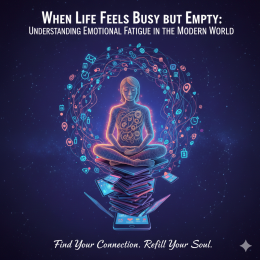
When Life Feels Busy but Empty: Understanding Emotional Fatigue in the Modern World
2026-01-19 18:29:15We live in a time where life rarely slows down. Notifications never stop, deadlines overlap, and productivity is often mistaken for self-worth. Yet, despite being constantly busy, many people describe an unsettling feeling - a quiet emptiness, a lack of motivation, or emotional numbness. This experience is increasingly common and often misunderstood. Emotional fatigue doesn’t always arrive with dramatic breakdowns; sometimes, it shows up as exhaustion that rest alone cannot fix.
Emotional fatigue develops when the mind is under prolonged pressure without enough space to recover. It can come from work stress, relationship responsibilities, academic expectations, or even the constant exposure to social media and comparison. Over time, the brain remains in a state of alertness, trying to cope, adapt, and perform. Eventually, this ongoing effort begins to drain emotional energy, leaving individuals feeling detached, irritable, or indifferent toward things that once mattered.
One of the most confusing aspects of emotional fatigue is that it often exists alongside outward success. A person may appear functional - attending work, meeting responsibilities, socializing - yet internally feel disconnected. This mismatch can lead to guilt or self-doubt, as people tell themselves they “shouldn’t” feel this way. However, emotional fatigue is not a sign of weakness. It is the mind’s response to prolonged emotional demand without adequate care.
Modern lifestyles unintentionally encourage this exhaustion. Constant digital engagement reduces mental downtime, while societal pressure to “keep going” discourages rest. Many individuals suppress their emotions to remain productive, unknowingly teaching the brain that emotions are interruptions rather than signals. Over time, suppressed stress doesn’t disappear; it accumulates, often emerging as chronic tiredness, poor concentration, sleep disturbances, or a sense of emptiness.
Healing from emotional fatigue begins with awareness. Recognizing emotional exhaustion as a legitimate mental health concern is the first step toward recovery. Small changes - such as creating boundaries with work, allowing mental breaks without guilt, and reconnecting with activities that provide meaning rather than achievement - can gradually restore emotional balance. Equally important is giving oneself permission to slow down, not as a failure, but as a form of self-respect.
Professional mental health support plays a crucial role in addressing emotional fatigue. Therapy offers a safe space to explore unprocessed emotions, identify stress patterns, and develop healthier coping strategies. At CIIMHANS, mental health care focuses not only on treating symptoms but on understanding the individual behind them. Emotional fatigue is often a signal that something within needs attention, compassion, and care.
In a world that glorifies constant motion, choosing emotional well-being is an act of strength. Life does not need to feel endlessly busy to be meaningful. Sometimes, the most important progress happens when we pause, reflect, and allow ourselves to heal - one moment at a time.