
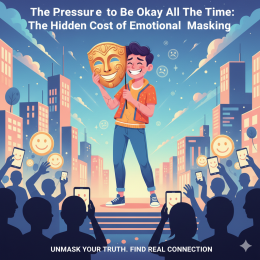
The Pressure to Be Okay All the Time: The Hidden Cost of Emotional Masking
2026-01-22 18:08:31In everyday conversations, “I’m fine” has become a reflex rather than an honest answer. Many people move through their days carrying stress, sadness, or anxiety behind a practiced smile. This habit, known as emotional masking, is increasingly common in today’s fast-paced and performance-driven world. While it may seem harmless or even necessary, consistently hiding emotional struggles can quietly take a toll on mental health.
Emotional masking often begins as a coping mechanism. People learn to suppress their feelings to meet expectations at work, maintain harmony in relationships, or avoid being seen as weak. Over time, this suppression becomes automatic. Emotions are pushed aside, not processed. The mind stays alert, constantly monitoring how to appear “normal,” which gradually leads to emotional exhaustion.
One of the reasons emotional masking is so difficult to recognize is that it doesn’t always look like distress. Individuals may remain productive, socially active, and outwardly successful. However, internally they may feel disconnected, overwhelmed, or chronically tired. This inner conflict - between how one feels and how one presents themselves - can create persistent anxiety and a sense of isolation, even when surrounded by others.
Cultural and social expectations play a major role in reinforcing this pattern. Society often rewards resilience without acknowledging vulnerability. People are encouraged to move on quickly, stay strong, and avoid discomfort. As a result, emotions like grief, fear, or self-doubt are treated as problems to hide rather than signals to understand. Over time, unexpressed emotions don’t disappear; they resurface in subtler ways, such as sleep disturbances, irritability, low motivation, or physical complaints with no clear cause.
Mental health begins to improve when emotional honesty is allowed - first with oneself, and gradually with others. Acknowledging difficult feelings does not mean losing control, it means giving the mind permission to process what it has been carrying for too long. Small acts of authenticity, like admitting fatigue or asking for support, can reduce the internal pressure to perform emotional perfection.
Professional support can be especially helpful for individuals who have spent years masking their emotions. Therapy offers a safe, non-judgmental space to explore feelings that were previously suppressed and to rebuild a healthier relationship with one’s emotional world. At CIIMHANS, mental health care emphasizes understanding the person beyond appearances, recognizing that many struggles remain invisible until someone feels safe enough to speak.
Being okay all the time is not a realistic or healthy expectation. Emotional well-being is not about constant positivity but about balance, self-awareness, and compassion. When people allow themselves to be human - with all their complexities - they take an important step toward genuine healing. Sometimes, the most powerful act of strength is simply allowing yourself to be honest about how you feel.