
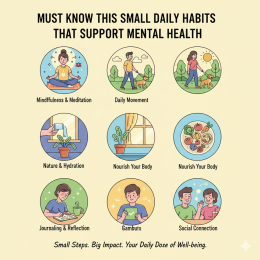
Must Know This Small Daily Habits That Support Mental Health
2026-01-23 17:58:02Mental health is often discussed only when something feels wrong. People seek support during burnout, anxiety, emotional breakdowns, or moments of crisis. But mental well-being is not built only in difficult times. It is shaped quietly, every day, through small habits that may seem insignificant but have a powerful impact on how the mind functions and feels over time.
In today’s fast-moving world, many people believe that improving mental health requires big changes - long breaks, complete lifestyle transformations, or extreme self-discipline. In reality, the mind responds best to consistency, not intensity. Small, manageable habits practiced daily can gently strengthen emotional balance, resilience, and inner calm.
One of the simplest yet most overlooked habits is creating a gentle start to the day. The way the mind wakes up sets the tone for the hours that follow. Rushing immediately into notifications, emails, or stress can put the brain into survival mode before the day has even begun. Taking a few quiet moments in the morning - to breathe, stretch, or simply sit without distraction - allows the nervous system to settle. This small pause reminds the mind that it is safe and not under immediate threat.
Another important habit is learning to check in with emotions instead of ignoring them. Many people move through their days on autopilot, pushing feelings aside to remain productive. Over time, unacknowledged emotions build internal pressure. Asking yourself simple questions like “How am I feeling right now?” or “What do I need at this moment?” can help create emotional awareness. This habit doesn’t require solutions or judgment - only honesty. When emotions are noticed, they are less likely to overwhelm.
Movement also plays a vital role in mental well-being, not as punishment or performance, but as care. Gentle physical activity - walking, stretching, or light exercise - helps release stored tension from the body. The mind and body are deeply connected, and movement signals the brain to release chemicals that improve mood and reduce stress. Consistency matters more than intensity. Even a short daily walk can make a noticeable difference over time.
Equally important is how we speak to ourselves throughout the day. The inner dialogue often goes unnoticed, yet it strongly influences mental health. Constant self-criticism, comparison, or pressure can drain emotional energy. Replacing harsh thoughts with kinder, more realistic ones is a habit that takes practice. Speaking to yourself the way you would speak to a loved one creates emotional safety within the mind.
Rest is another habit that supports mental health but is often misunderstood. Rest is not only sleep; it is mental pause. Allowing yourself moments of doing nothing - without guilt - helps the brain reset. Continuous stimulation, whether through work or screens, keeps the mind overstimulated. Taking short breaks, stepping away from devices, or spending time in silence allows the nervous system to recover.
Connection also plays a quiet but powerful role in emotional well-being. Mental health improves when people feel seen and understood. This does not require large social circles or constant interaction. Meaningful conversations, honest sharing, or simply spending time with someone who feels safe can ease emotional loneliness. Even small daily interactions can remind the mind that it is not alone.
At CIIMHANS, we often observe that mental health challenges rarely appear suddenly. They develop when stress, emotions, and exhaustion remain unaddressed for long periods. Small daily habits act as protective factors. They do not eliminate difficulties, but they help the mind cope more effectively and recover more gently.
Mental well-being is not about perfection or positivity all the time. It is about awareness, balance, and care. Small habits may not feel dramatic, but over time, they create emotional stability and strength. Choosing to care for your mind daily is not selfish - it is necessary. And sometimes, the smallest steps lead to the most meaningful healing.
At CIIMHANS, we believe mental health support begins not only in therapy rooms but also in everyday choices. If your mind feels tired, overwhelmed, or unsettled, remember that healing does not always require big changes. Sometimes, it begins with small, consistent acts of kindness toward yourself.