
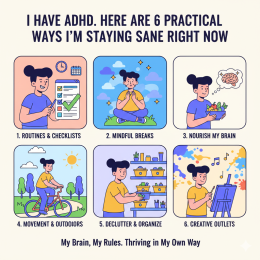
I Have ADHD. Here Are 6 Practical Ways I’m Staying Sane Right Now
2026-01-27 17:09:06Living with ADHD doesn’t always look like chaos from the outside. Most days, I appear functional. Work gets done. Messages are replied to. Life moves forward. But inside, my mind often feels like ten browser tabs open at once — all playing different sounds, all demanding attention. Some days are manageable. Some days are overwhelming. Staying “sane” isn’t about fixing my ADHD; it’s about learning how to work with my brain instead of constantly fighting it.
Over time, I’ve learned that survival doesn’t come from grand routines or perfect discipline. It comes from small, realistic strategies that respect how my mind actually works.
The first thing that has helped is letting go of the idea that motivation comes before action. For a long time, I waited to feel ready before starting anything. With ADHD, that moment rarely arrives. Now, I start messy. I open the document. I write one line. I set a five-minute timer. Once motion begins, momentum often follows. I’ve stopped demanding enthusiasm from myself and started allowing effort to come first.
Another thing keeping me grounded is externalizing my memory. My brain is not built to hold onto tasks, reminders, or timelines — and that’s not a personal failure. I write everything down. Notes, alarms, sticky reminders, voice memos. Instead of saying “I’ll remember,” I say “I’ll offload this.” When my environment supports my memory, my mind feels lighter and less anxious.
Structure has also become my quiet lifesaver — but not rigid structure. I don’t thrive on strict schedules that leave no room for fluctuation. What works is flexible rhythm. I have anchor points in my day — meals, one priority task, one rest window — and I allow everything else to flow around them. This reduces decision fatigue and prevents the all-or-nothing crashes that ADHD often brings.
Rest, for me, had to be redefined. Sitting still and doing nothing doesn’t always feel restful to my brain. Sometimes rest looks like movement, music, or doing something repetitive and calming. I’ve learned to stop forcing myself to “relax properly” and instead ask what actually soothes my nervous system. When rest feels natural, guilt slowly fades.
One of the hardest lessons has been learning to talk to myself more gently. ADHD comes with years of internalized criticism — being called lazy, careless, or inconsistent. I used to repeat those words in my own head. Now, when I miss something or struggle, I try to respond with curiosity instead of punishment. “What made this hard?” works better than “What’s wrong with me?” Self-compassion doesn’t erase ADHD, but it makes living with it less painful.
Finally, I’ve learned that asking for support is not weakness. ADHD can feel incredibly isolating, especially when struggles are invisible. Whether it’s therapy, professional guidance, or simply explaining my needs to someone I trust, sharing the load has helped me breathe easier. I don’t need to do everything alone to prove I’m capable.
Staying sane with ADHD isn’t about mastering life. It’s about building systems that hold me on days when my mind feels loud and scattered. Some days are still hard. Some days are messy. But they’re no longer filled with shame.
ADHD doesn’t mean I’m broken. It means my brain works differently — and learning how to care for it is an ongoing act of patience, not perfection.