
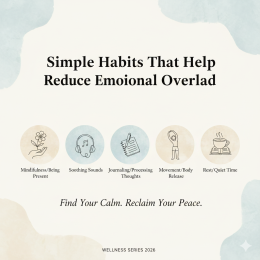
Simple Habits That Help Reduce Emotional Overload
2026-02-14 16:15:46There are days when everything feels like too much. Messages keep coming in, responsibilities pile up, conversations feel heavier than usual, and even small decisions seem exhausting. Emotional overload doesn’t always arrive dramatically - sometimes it builds quietly, layer by layer, until your mind feels crowded and your body feels tense. The good news is that reducing emotional overwhelm doesn’t require a complete life reset. Often, small, consistent habits can create powerful relief.
One of the simplest habits is pausing before reacting. When emotions run high, the instinct is to respond immediately - to reply to the message, defend yourself, fix the problem, or make a quick decision. But giving yourself even a minute to breathe deeply can calm your nervous system. Slow breathing signals safety to the brain. A short pause can prevent emotional escalation and help you respond thoughtfully instead of impulsively.
Another helpful habit is limiting information intake. Constant exposure to news, social media updates, and digital conversations can overstimulate the mind. Setting specific times to check your phone or consume media reduces unnecessary mental noise. Protecting your attention is a form of emotional self-care. You don’t have to absorb everything happening around you.
Physical movement is also a powerful regulator of emotions. Emotional overload often lives in the body - tight shoulders, headaches, restlessness, fatigue. Gentle stretching, a short walk, or even standing up and moving around for a few minutes can release built-up tension. Movement helps the body process stress hormones, making emotional weight feel lighter.
Creating small boundaries is another essential habit. Emotional overload frequently happens when we say “yes” too often or take on responsibilities that stretch us too thin. Learning to say “not right now” or “I need some time to think” protects your energy. Boundaries are not selfish - they are necessary for sustainability. When your energy is protected, your responses become healthier and more intentional.
Writing down what you’re feeling can also reduce mental clutter. When thoughts spin in your head, they feel bigger and more overwhelming. Putting them on paper organizes them. You may realize that not everything needs immediate action. Sometimes the mind simply needs space to unload.
Finally, practicing self-compassion during overwhelming moments makes a significant difference. Many people respond to emotional overload by criticizing themselves - “Why am I so sensitive?” “I should handle this better.” But emotional overwhelm is not weakness; it is a signal that you need care. Speaking to yourself with patience instead of judgment softens the intensity of your emotions.
Emotional overload is a human experience, especially in a fast-paced world. The goal is not to eliminate emotions, but to manage them in healthy, realistic ways. Small daily habits - pausing, limiting input, moving your body, setting boundaries, journaling, and practicing self-kindness - can create stability even on heavy days.
You don’t need to control everything around you. Sometimes, you only need to gently support yourself within it.