
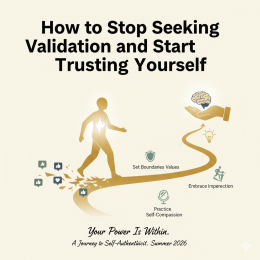
How to Stop Seeking Validation and Start Trusting Yourself.
2026-02-20 17:10:38At some point, many of us begin measuring our worth through other people’s reactions. A compliment makes us feel confident. Silence makes us anxious. Approval feels like success, and disapproval feels like failure. Without realizing it, we start outsourcing our self-worth.
Seeking validation is deeply human. We are wired for connection. We want to belong, to be accepted, to be seen. But when validation becomes the main source of confidence, it creates emotional instability. Your mood begins to depend on other people’s opinions. And opinions are unpredictable.
The first step toward trusting yourself is noticing when you’re chasing approval. Do you over-explain your decisions? Do you hesitate to share ideas unless you’re sure they’ll be liked? Do you constantly check for reassurance before making choices? Awareness is powerful. You can’t change a pattern you don’t recognize.
Validation becomes a habit when we doubt our own judgment. Instead of asking, “What do I think?” we ask, “What will they think?” Over time, this weakens your inner voice. The more you rely on external approval, the quieter your self-trust becomes.
Building self-trust starts small. It begins with making decisions independently - even simple ones. Choose what you genuinely prefer without polling everyone around you. Express an opinion without softening it for acceptance. Wear what feels right. Speak up when something matters. These small acts strengthen your internal foundation.
It also helps to understand that disagreement is not rejection. Not everyone will approve of your choices, and that’s okay. You are not responsible for managing everyone else’s comfort. When you allow people to have their opinions without absorbing them as truth, you protect your confidence.
Another important shift is redefining mistakes. When you depend on validation, mistakes feel like public proof that you’re not good enough. But mistakes are not identity statements - they are learning experiences. Trusting yourself doesn’t mean always being right. It means knowing you can handle being wrong and still move forward.
Self-trust grows when you keep promises to yourself. If you say you’ll set a boundary, follow through. If you say you’ll rest, allow it. If you say something doesn’t feel right, honour that feeling. Each time you respect your own needs, you send a message inward: “My voice matters.”
The goal is not to stop caring about others completely. Healthy feedback is valuable. Support is important. But there’s a difference between appreciating input and depending on approval. When your decisions align with your values - even if they’re unpopular - you begin to feel steadier.
You don’t need applause to validate your existence. You don’t need universal agreement to justify your choices. The more you trust yourself, the less you’ll feel the need to prove yourself.
Confidence isn’t built from constant praise. It’s built from quiet alignment - choosing what feels true to you, even when no one is watching.